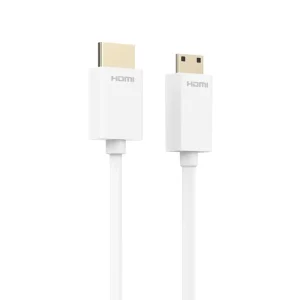
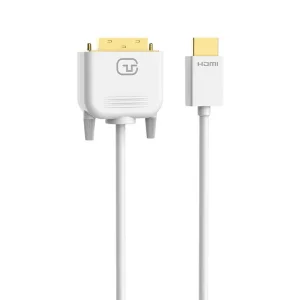
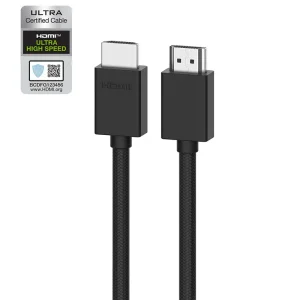
In the rapidly evolving landscape of digital visual data, HDMI (High-Definition Multimedia Interface) remains the gold standard. From the original HDMI 1.0 to the current high-performance HDMI 2.1 and beyond, the interface has become the nervous system of modern consumer electronics and industrial visual systems. As we analyze the industry, it is evident that procurement decisions for HDMI 2.0 and high-bandwidth cables are driven by a convergence of bandwidth requirements, 4K/8K resolution trends, and the growing demand for gaming and professional visual performance.
Global procurement teams often identify Dongguan, China, as the epicenter of cable manufacturing. The efficiency found here—specifically in companies like Dongguan Taitron Electronics—is not merely about labor costs; it is about vertical integration. By controlling the entire chain, from raw wire drawing to final assembly, manufacturers can guarantee consistency in impedance, shielding integrity, and signal transmission—factors crucial for high-speed HDMI 2.0 and 2.1 specifications.
The market is shifting. We are no longer just looking for "cables." We are looking for data transmission solutions that support:
International buyers are increasingly prioritizing quality certification (CE, FCC, RoHS, HDMI Licensing Administration compliance) over mere price points. Reliability in manufacturing is the new currency. Procurement departments are seeking suppliers that offer rapid R&D lead times—typically 4 to 6 weeks for new product development—enabling them to stay ahead of the product lifecycle curve in competitive consumer electronics markets.
Industry Legacy
Production Area
Patents Held
Annual Turnover (RMB)
Dongguan Taitron Electronics, established in 1984, embodies the evolution of the industry. From its roots in Taiwan to its expansive current facilities in Dalingshan Town, the company has transitioned from simple audio/video peripherals to the manufacturing of complex, high-bandwidth data transmission hardware. This progression reflects the broader industry movement toward high-end connectivity solutions, including HDMI 2.1, DP 2.0, and USB4 technology.
A: Choosing a factory with independent R&D, such as those with over 60 patents, ensures that you are not just buying a commodity. You are gaining access to custom engineering, better signal integrity testing, and the ability to adapt to new standards like HDMI 2.1 faster than competitors.
A: HDMI 2.0 supports a bandwidth of 18Gbps, allowing for 4K video at 60Hz. Older standards cannot handle the data throughput required for modern professional digital signage or high-end home theater setups.
A: Factory-direct procurement reduces middleman markups and allows for direct communication regarding technical specifications, such as shielding requirements and length-to-performance ratios, ensuring you get exactly what your project needs.
 Taitron Electronics