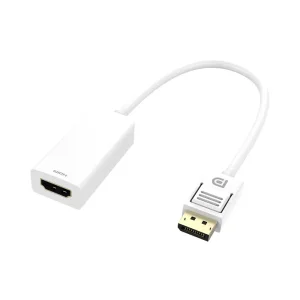
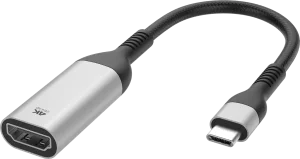
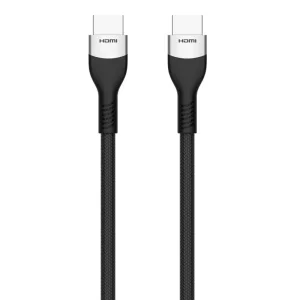
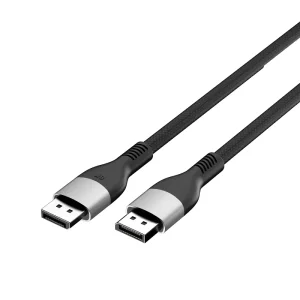
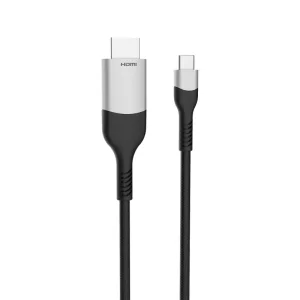
In the rapidly evolving landscape of digital visual interfaces, the role of Custom HDMI Cable Speed Companies has shifted from simple cable assembly to complex signal integrity engineering. As we enter the era of 8K@60Hz, 4K@144Hz, and high-dynamic-range (HDR) gaming, the copper infrastructure must handle data rates exceeding 48Gbps. This requires precision manufacturing, advanced shielding against electromagnetic interference (EMI), and stringent testing protocols.
Global procurement managers and technology integrators now prioritize suppliers that operate not just as assembly lines, but as R&D partners. The demand for HDMI 2.1 certification and backward compatibility means that factories must possess deep expertise in material science—optimizing the dielectric constant of wire insulation to reduce signal loss over distance. Whether for medical imaging, competitive gaming, or professional broadcasting, the "speed" of the cable is no longer just a marketing metric; it is the backbone of user experience.
China's dominance in the electronics manufacturing sector, particularly in Dongguan, is built upon a foundation of hyper-efficient supply chains and localized vertical integration. Suppliers like Dongguan Taitron Electronics Limited represent the evolution of this sector. With over 38 years of experience, the transition from basic manufacturing to high-end data cables—including USB4 and HDMI 2.1—showcases a shift toward high-value-added production.
Efficiency & Scalability: The ability to deliver custom OEM/ODM solutions within 4-6 weeks for new products provides global companies with the agility to respond to market trends. By leveraging massive production capacity (50,000㎡) and a skilled labor force, Chinese factories ensure that price competitiveness does not come at the expense of technical performance. For procurement professionals, this means a reliable partner that can scale production from small batches to mass-market quantities without quality drift.
Founded (Legacy of Quality)
Production Area
Registered Patents
Skilled Employees
Annual Turnover (Yuan)
Production Lines
Founded in 1984 as Tonetron in Keelung, Taiwan, and later establishing its massive footprint in Dongguan, China in 1993, the company has institutionalized its expertise. With a focus on HDMI 2.1, DP 2.0, and USB4 technologies, they represent the gold standard in the export market. This level of specialization, backed by 61 patents, provides the E-E-A-T (Experience, Expertise, Authoritativeness, Trustworthiness) that global distributors seek when selecting an OEM/ODM provider.
Modern procurement is driven by three pillars: Data Integrity, Material Sustainability, and Certification Compliance.
A: High-speed cables (HDMI 2.1) support up to 48Gbps, enabling 8K resolution and dynamic HDR. Inferior cables suffer from "handshake" failures and signal drops, leading to high return rates for distributors.
A: Look for factories with in-house R&D, patent portfolios, and certifications like ATC (Authorized Testing Center) approvals. Consistency in mass production is key.
A: A professional manufacturer typically takes 4-6 weeks for new product design and prototyping, ensuring rigorous testing before mass production.
 Taitron Electronics