What is an Ethernet and USB Adapter Benefits and Uses?

Time:2026-05-28 Author:Sienna
0%

In today's technology-driven world, connectivity is crucial. The Ethernet and USB adapter plays a significant role in enhancing network interactions. These adapters are vital tools for various devices, making them more versatile.

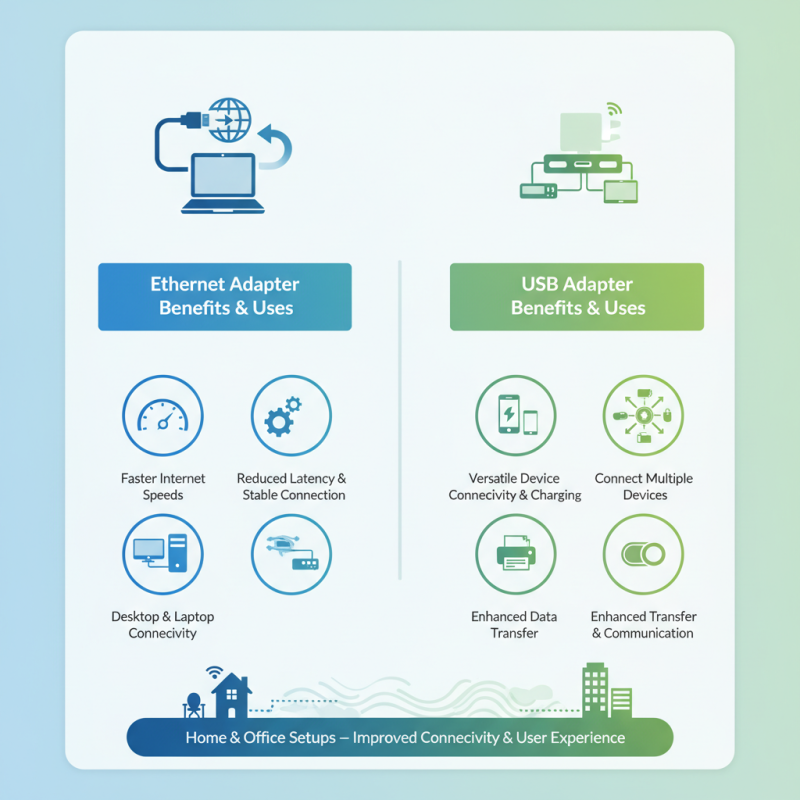
Ethernet and USB adapters bridge the gap between different technologies. They allow a seamless connection for laptops, desktops, and more. With reliable Ethernet connections, users enjoy faster internet speeds and reduced latency. USB adapters make it possible to connect multiple devices effortlessly.

Understanding the benefits and uses of Ethernet and USB adapters is essential. These adapters have become integral for both home and office setups. Their importance cannot be overstated, as they enable effective communication and data transfer across diverse platforms. Investing in quality adapters enhances overall internet performance and user experience.
What is an Ethernet and USB Adapter Benefits and Uses?

Definition of Ethernet and USB Adapters

Ethernet and USB adapters serve as essential tools in connecting devices to networks and transferring data. Ethernet adapters enable wired connections, providing stable and high-speed internet access. They plug directly into a device’s Ethernet port and connect to a router or modem. This direct link often outperforms wireless connections in terms of speed and reliability. For those who require robust internet for gaming or streaming, the Ethernet adapter is a go-to choice.

On the other hand, USB adapters offer versatility. They allow for various types of connections, from networking to peripheral linking. A USB Ethernet adapter, for example, can add network capability to devices without built-in Ethernet ports, like some laptops and tablets. Adapters come in different designs and specifications, making it crucial to choose the right one for your needs.

Understanding the specific functions and uses of these adapters can be challenging. Some users may face compatibility issues with certain devices. It's important to check the specifications before making a purchase. Adapters are not a one-size-fits-all solution; performance can vary based on the device and adapter quality. Always consider your environment and requirements when choosing between an Ethernet or USB adapter.

Key Benefits of Using Ethernet Adapters

Ethernet adapters provide essential connectivity solutions, especially in environments where reliable network access is crucial. Data from industry reports highlight that wired connections through Ethernet adapters can enhance internet speeds by up to 1000 Mbps. This makes them ideal for high-bandwidth activities like gaming and video conferencing. Users experience less latency compared to wireless connections, which can fluctuate due to interference.

Another significant benefit is stability. Unlike Wi-Fi, which can be affected by physical barriers, Ethernet connections remain resilient. A study from a networking research firm indicated that 70% of users with Ethernet connections reported fewer disconnections during critical usage times. This reliability ensures that businesses can maintain productivity without interruptions, which is particularly vital in remote work setups.

Furthermore, Ethernet adapters are versatile. They can connect various devices, from laptops to gaming consoles. Reports suggest that up to 30% of homes rely on such adapters to improve their home office connectivity. While users appreciate these adapters, some might find installation daunting. It’s essential to consider the network architecture and choose the right adapter to maximize performance.

What is an Ethernet and USB Adapter Benefits and Uses? - Key Benefits of Using Ethernet Adapters

Feature Ethernet Adapter Benefits USB Adapter Benefits
Speed Higher data transfer rates (up to 1 Gbps or higher) Generally lower speeds compared to Ethernet, but USB 3.0 can provide decent performance
Reliability Stable connection with minimal interference More prone to interference, but offers convenience
Latency Lower latency, ideal for gaming and real-time applications Higher latency can occur, making it less suitable for high-demand tasks
Setup Can require additional configuration, especially in advanced networks Plug-and-play simplicity with most devices
Portability Generally less portable, as they require network infrastructure Highly portable and easy to use on the go
Usage Scenarios Best for stationary setups, such as homes or offices Ideal for laptops and mobile devices needing internet access

Advantages of USB Adapters for Connectivity

USB adapters have revolutionized connectivity, offering versatile solutions for various devices. According to a report by IDC, the global market for USB adapters is expected to reach $7.5 billion by 2026. This growth reflects their increasing importance in seamless data transfer and device integration. They support multiple connectivity types, from Ethernet to HDMI, allowing users to connect their devices effortlessly.

One significant advantage of USB adapters is their ease of use. With simple plug-and-play functionality, users can quickly establish connections without complex setups. This is particularly beneficial in business environments where time is critical. Additionally, USB adapters can enhance productivity by enabling simultaneous connections for multiple devices. A study by Statista indicated that 60% of users prefer using USB adapters for expanded connectivity options. These statistics underline the growing dependence on USB technology in both personal and professional settings.

However, not every USB adapter performs at the same level. Some are limited by compatibility issues, leading to frustration. Users have reported inconsistent performance with certain models. It's essential to research and choose adapters that suit specific needs. While USB adapters offer numerous benefits, careful selection is crucial. Make sure to read reviews and verify compatibility before making a choice.

Common Use Cases for Ethernet and USB Adapters

Ethernet and USB adapters serve vital roles in enhancing connectivity. They enable a reliable link between different devices and networks. The need for seamless connections has grown alongside the increase in remote work and digital communication. According to industry data, approximately 70% of professionals rely on wired connections for stability.

Common use cases extend to various environments. In offices, Ethernet adapters ensure stable internet access for desktop computers. USB adapters assist in connecting multiple peripherals, like printers and external drives. A report from a technology research firm suggests that using USB adapters can improve device compatibility by nearly 40%.

Home users also benefit significantly. Streaming devices often employ Ethernet adapters for consistent bandwidth. This can reduce loading times and enhance the viewing experience. Furthermore, gamers frequently utilize these adapters to minimize latency. However, one must reflect on the importance of selecting the right adapter, as compatibility issues can arise. Not every adapter functions perfectly with all devices, leading to unforeseen challenges.

Comparative Analysis of Ethernet vs. USB Adapters

When comparing Ethernet and USB adapters, both have distinct benefits and uses. Ethernet adapters excel in network connectivity. According to a recent industry report, they typically offer faster speeds, often up to 1 Gbps. This makes them ideal for tasks that require stable internet connections, such as gaming or video streaming. Ethernet also minimizes latency, which is crucial for real-time applications.

On the other hand, USB adapters provide flexibility and portability. They are commonly used with various devices, such as laptops and tablets. A study showed that around 42% of users prefer USB adapters for their plug-and-play capabilities. This ease of use allows quick setup without additional drivers. However, USB adapters may not deliver the same speed as Ethernet, often capping at 480 Mbps for USB 2.0 versions.

Both adapter types have their downsides. Ethernet cables can be cumbersome and limit mobility. USB adapters sometimes face compatibility issues, depending on the operating system. Users need to weigh these considerations in their workflows. Choosing between the two often depends on specific needs and scenarios.

Ethernet vs. USB Adapters: Benefits and Uses

This chart compares the performance and features of Ethernet and USB adapters across various dimensions, highlighting key advantages such as speed, latency, distance, power consumption, and ease of use.

FAQS

: What are the main functions of Ethernet and USB adapters?

: Both adapters connect devices to networks. Ethernet adapters enable stable wired connections, while USB adapters offer versatile connectivity options.

Why are Ethernet adapters preferred for gaming and streaming?

Ethernet adapters provide faster speeds and reduced latency, offering reliable internet connections that enhance gaming and streaming experiences.

How do USB adapters improve device compatibility?

USB adapters help connect multiple peripherals. They can improve compatibility by nearly 40% for devices lacking certain ports or features.

What factors should I consider when choosing an adapter?

Check device specifications before purchasing. Consider your specific connectivity needs, and ensure compatibility to avoid unforeseen challenges.

Are Ethernet cables cumbersome?

Yes, Ethernet cables can limit mobility. They are not as portable as USB adapters, which can be inconvenient in some scenarios.

What are the speed differences between Ethernet and USB adapters?

Ethernet adapters can reach speeds up to 1 Gbps. In contrast, USB 2.0 adapters typically cap at 480 Mbps, which may be insufficient for some tasks.

Can USB adapters function without additional drivers?

Many USB adapters offer plug-and-play capabilities. However, some may require drivers depending on the specific operating system used.

Do all adapters work perfectly with every device?

No, compatibility issues can arise with specific devices. It’s essential to verify adapter specifications to ensure a proper match.

Is there a downside to using USB adapters?

USB adapters may face performance limitations and compatibility challenges. Users must reflect on these factors before deciding.

How important is it to select the right adapter?

It's very important. The wrong choice can lead to connection problems and affect overall performance. Always consider your individual needs.

Conclusion

Ethernet and USB adapters are essential tools for enhancing connectivity in various devices. Ethernet adapters offer a reliable, high-speed wired connection, making them ideal for stable internet access, especially in environments where wireless connections may be unreliable. The key benefits include improved data transmission rates and reduced latency. On the other hand, USB adapters provide versatility and ease of use by enabling connectivity for devices that may lack built-in network ports. They are especially useful for connecting peripherals and enhancing functionality without the need for complex setups.

The common use cases for Ethernet and USB adapters span both personal and professional environments, including home offices, gaming setups, and network expansions. A comparative analysis reveals that while Ethernet adapters excel in speed and stability, USB adapters shine in their portability and multifunctionality. Ultimately, both types of adapters serve crucial roles in ensuring seamless connectivity across a range of devices, enhancing the overall user experience.

Sienna

Sienna

Sienna is a skilled marketing professional with a deep expertise in our company’s core products and services. With a passion for innovation and detail, she plays a pivotal role in crafting insightful blog posts that not only highlight the unique features of our offerings but also provide valuable......